

Inside the Production Line: How an Automated Filling Line Runs at a Customer’s Factory — From Cooking and Concentrating to Filling
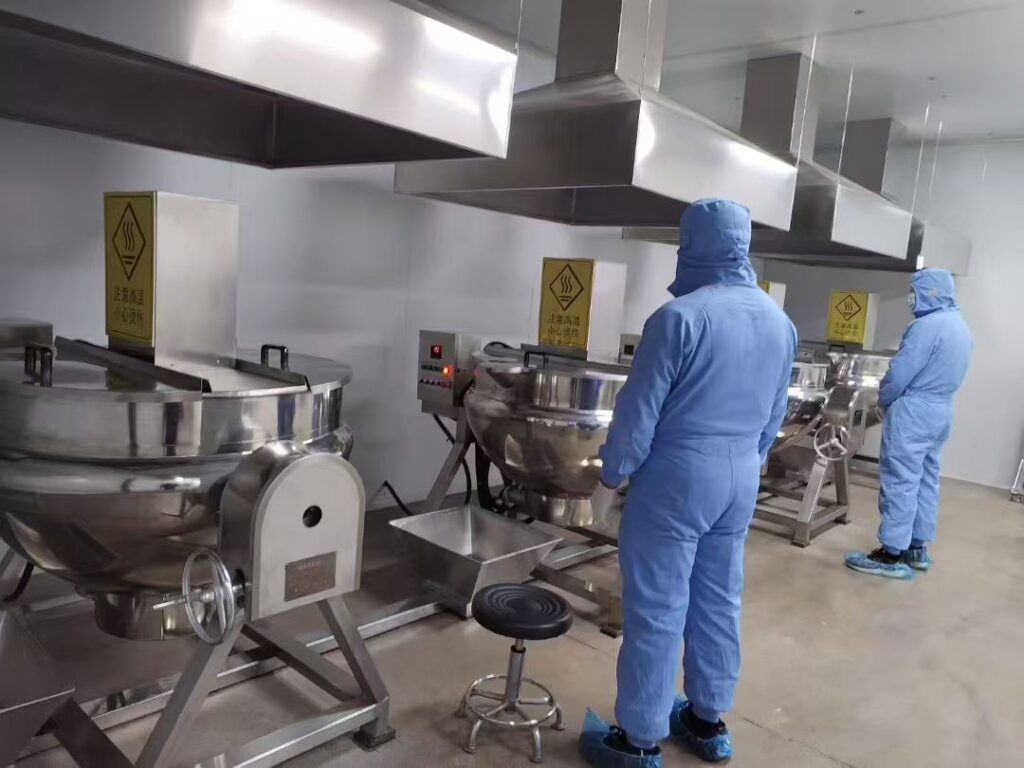
In the workshop, rows of stainless steel jacketed cooking kettles stand neatly in place, steam pipes run along the ceiling exhaust hoods, and two workers in blue cleanroom suits are inspecting the equipment — a routine scene inside a food manufacturer’s plant. And this is exactly the working environment in which Dongguan Wanxing Machinery Equipment Co., Ltd.’s filling equipment operates every day.
Recently, we visited a customer’s factory and documented, through the lens, the complete production process — from material handling to filling and packaging.
Stop 1: The Cooking Workshop — Cleanliness and Order Make the First Impression
The first thing you notice when entering the workshop is a row of stainless steel jacketed cooking kettles. The equipment surfaces are polished and neatly arranged, with large stainless steel exhaust ducts running through the entire ceiling, and prominent “Caution: Hot Surface” safety signs on the walls.
Here, the cooking and blending of materials is carried out under strict cleanroom conditions. Workers in full-body protective suits, caps and masks operate in a standardized, disciplined manner. For an equipment manufacturer, a well-managed customer workshop means the quality of the downstream filling process is far more assured — stable pre-treatment is the foundation of accurate filling.
Stop 2: The Concentration Area — Process Stability Gives Filling Its Confidence
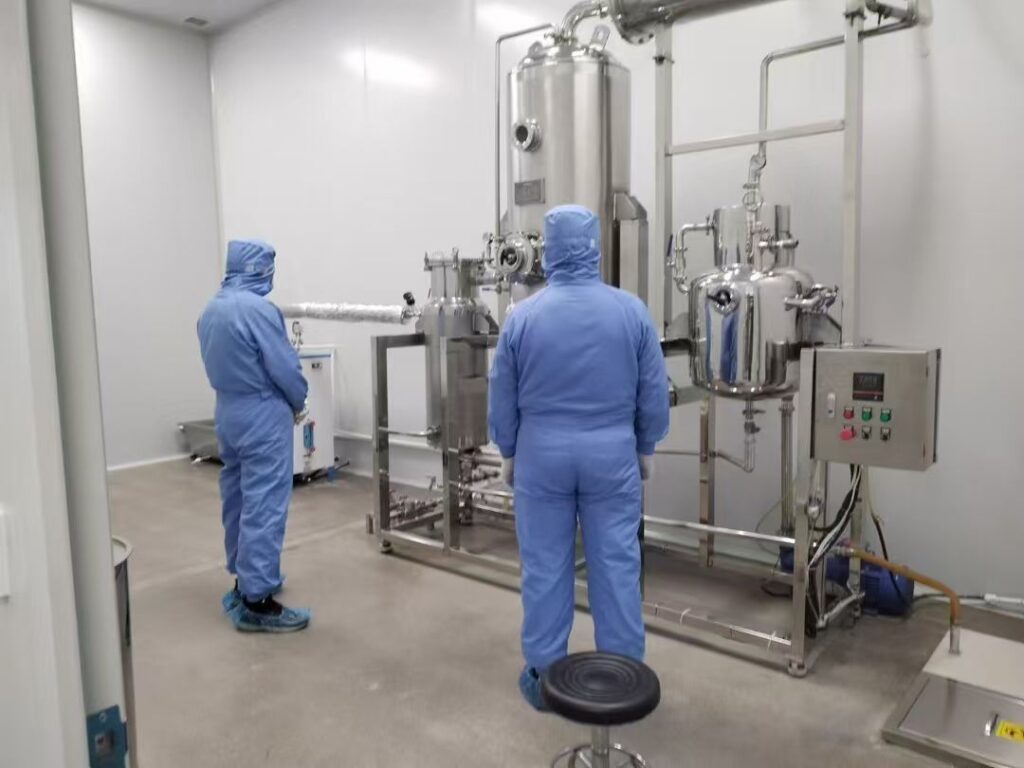
Past the cooking workshop lies another large equipment area. Stainless steel distillation and concentration units stand tall, with pipes, valves and electrical control panels neatly laid out, while two workers operate beside the equipment.
For pastes and sauces, the concentration process directly determines the viscosity and density of the material — and different viscosities call for different filling methods. This is precisely where the value of non-standard customized filling equipment lies: based on the customer’s actual upstream process, the right filling principle is selected, whether magnetic pump or piston, ensuring the material flows steadily from the concentration tank to the filling nozzle with accurate metering.
Stop 3: The Automated Filling Line — Full-Line Operation in Harmony Between Man and Machine
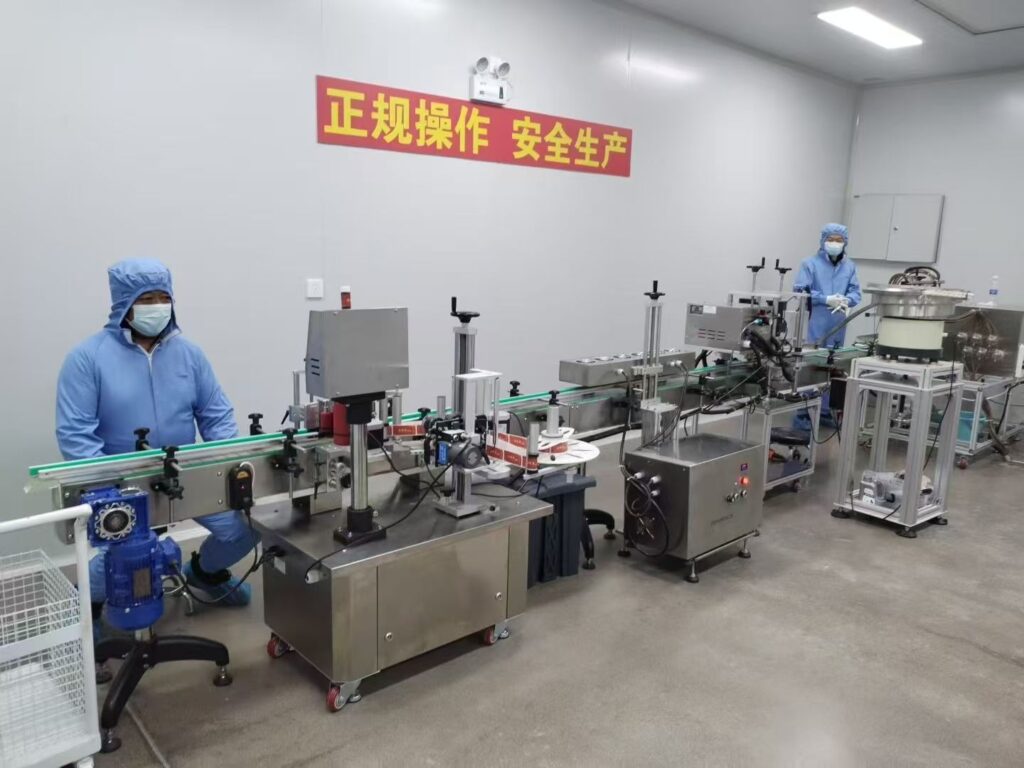
Finally, we reach the core of the automated production line. The conveyor runs smoothly, stainless steel equipment and electrical control cabinets are arranged in sequence, one worker monitors the operation from the operator station, while another coordinates at the far end of the line. The slogan on the wall — “Standardized Operation, Safe Production” — echoes the disciplined movements of the workers.
From material entering the filling machine to completing capping, screw capping and sealing, every stage of the line is seamlessly connected and running stably. Here, the equipment is no longer a standalone machine, but an integrated solution deeply matched to the customer’s production rhythm, material characteristics and workshop layout — a live demonstration of Dongguan Wanxing Machinery’s “non-standard customization, full-line delivery” capability.
The Real Test of Equipment Happens on the Factory Floor
For machinery, the most honest evaluation always takes place at the production site. Walking into a customer’s factory and seeing the equipment running stably in a clean, well-managed environment — seeing skilled operators and a smoothly running line — speaks louder than any marketing claim.
Dongguan Wanxing Machinery Equipment Co., Ltd. will continue to stay close to customers’ production floors, leveraging its non-standard customization capabilities and full-line delivery experience to provide truly tailored filling solutions for customers in the food, beverage, chemical, pharmaceutical and daily chemical industries.